
Understanding Hormone Replacement Therapy (HRT)
What is HRT and how does it work?
Let’s keep it simple your body runs on hormones like a car runs on fuel. When those hormone levels drop, things start to feel off. That’s where Hormone Replacement Therapy (HRT) steps in. It’s a medical treatment designed to restore hormones like estrogen, progesterone, or testosterone when your body stops producing enough of them naturally.
For women, this usually happens during menopause. For men, testosterone levels slowly dip with age. HRT works by supplementing these missing hormones, helping your body regain balance. Think of it as topping up your system so it can function smoothly again.
Doctors typically prescribe HRT in different forms pills, patches, gels, or injections depending on your needs. According to recent medical insights, HRT is widely used to manage symptoms like hot flashes, fatigue, and mood swings, which can otherwise disrupt daily life .
Types of HRT therapy for women and men
Not all HRT is created equal. There are different types based on your condition:
- Estrogen-only therapy (for women without a uterus)
- Combined estrogen + progesterone therapy
- Testosterone Replacement Therapy (TRT) for men
- Bioidentical hormone therapy
Each type serves a unique purpose. For example, combined therapy helps protect the uterus, while testosterone therapy focuses on restoring energy, muscle strength, and libido in men. Choosing the right one depends on your health profile, age, and symptoms.
Why People Consider Hormone Therapy
Aging and hormone imbalance
Aging doesn’t knock politely it just walks in and rearranges everything. Hormones decline naturally over time, and when they do, your body starts sending signals. You may feel tired for no reason, struggle with sleep, or notice changes in mood and weight.
This hormonal imbalance isn’t just about feeling a bit off. It can impact your overall quality of life. For many people, HRT becomes a way to regain control and feel like themselves again.
Menopause and testosterone decline explained
For women, menopause is a major turning point. Estrogen levels drop sharply, leading to symptoms like hot flashes, night sweats, and vaginal dryness. For men, testosterone decline is more gradual but still noticeable lower energy, reduced muscle mass, and decreased libido.
That’s why HRT therapy for women and TRT for men have become increasingly popular. They address the root cause instead of just masking symptoms.
Major Benefits of Hormone Replacement Therapy
Relief from menopause symptoms
One of the biggest reasons people turn to HRT? Relief. Plain and simple.
Hot flashes, night sweats, and mood swings can make everyday life feel exhausting. HRT helps regulate these symptoms by restoring hormone levels. Studies show that HRT is highly effective in reducing menopauserelated discomfort, especially hot flashes and night sweats .
Improved sleep and energy with HRT
Ever felt like you’re tired no matter how much you sleep? Hormone imbalance might be the culprit.
HRT often improves sleep quality by stabilizing hormones that affect your sleep cycle. And once your sleep improves, your energy naturally follows. People often describe it as getting their spark back.
Bone health and osteoporosis prevention
Here’s something many people overlook hormones play a huge role in bone health. Estrogen helps maintain bone density, and when it drops, bones become weaker.
HRT has been shown to reduce bone loss and lower the risk of fractures, especially in postmenopausal women . That’s a big deal if you’re thinking long term health.
Mental health and mood stability
Hormones don’t just affect your body they influence your mind too. Low hormone levels can lead to anxiety, irritability, and even depression.
By restoring balance, HRT can improve mood and emotional stability. It’s like turning down the noise in your head and finally getting some peace.
Testosterone Replacement Therapy (TRT) Benefits
Muscle strength and energy levels
For men, testosterone is key to maintaining muscle mass and physical strength. When levels drop, it becomes harder to stay active.
TRT helps rebuild that strength and boosts overall energy. Many men report feeling more motivated and physically capable after starting therapy.
Libido and confidence boost
Let’s be real low testosterone can affect confidence and relationships. TRT can improve libido and overall well being, helping men feel more like themselves again.
Risks of Hormone Replacement Therapy
Short-term side effects
Like any treatment, HRT isn’t perfect. Some people experience mild side effects at the beginning, such as:
- Headaches
- Nausea
- Breast tenderness
- Mood changes
These are usually temporary and fade as your body adjusts .
Long-term health risks
Now, here’s where things get serious. Long term use of certain types of HRT may increase risks such as:
- Blood clots
- Stroke
- Breast cancer (in some cases)
For example, combined HRT has been linked to a higher risk of breast cancer over time . However, the overall risk remains relatively low for many healthy individuals.
Risks specific to women vs men
Women may face risks related to estrogen levels, while men on TRT might experience:
- Increased red blood cell count
- Sleep apnea issues
- Fertility changes
That’s why medical supervision is non-negotiable.
Is HRT Safe for Menopause?
Who is the ideal candidate?
Here’s the good news HRT is considered safe for many people, especially if:
- You’re under 60
- You recently started menopause
- You don’t have a history of cancer or blood clots
In fact, research suggests that for many women, the benefits outweigh the risks when used appropriately .
When HRT should be avoided
HRT may not be suitable if you have:
- A history of breast cancer
- Blood clot disorders
- Liver disease
Always consult a doctor before starting therapy.
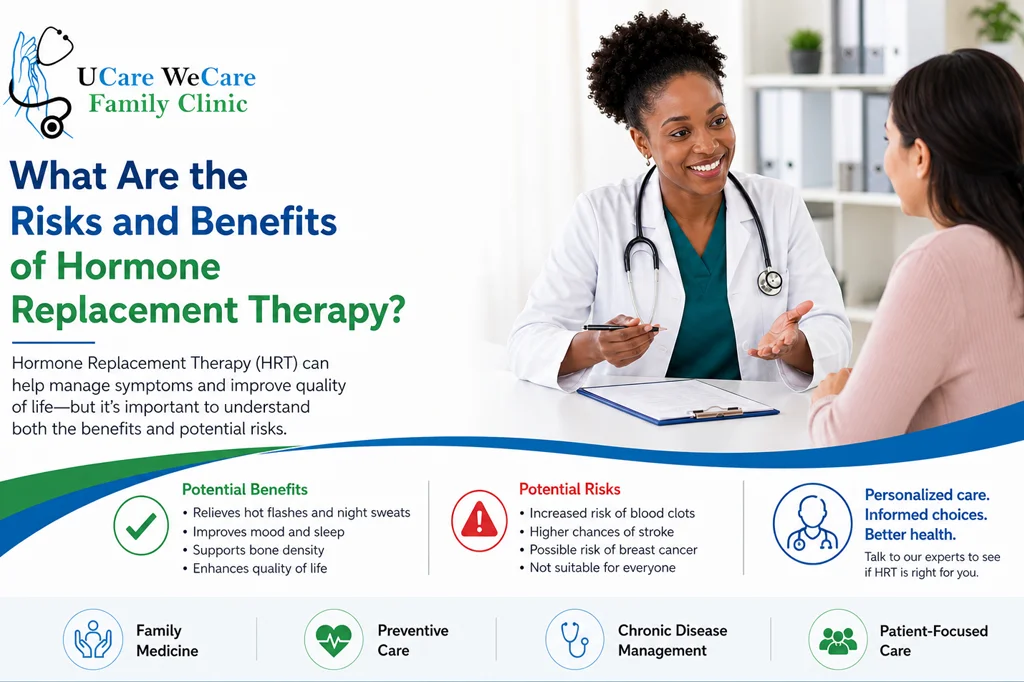
| Benefits | Risks |
|---|---|
| Relieves hot flashes and night sweats | Risk of blood clots |
| Improves sleep and energy | Possible stroke risk |
| Supports bone health | Increased cancer risk (some cases) |
| Enhances mood and mental clarity | Side effects like nausea or headaches |
| Boosts libido and physical strength | Requires long-term monitoring |
Finding the right clinic can make all the difference. You want a place that offers personalized care, proper testing, and ongoing monitoring. Don’t just go for convenience look for expertise.
Women’s health services in Newnan, GA
Clinics like UCare WeCare Family Clinic focus on tailored hormone therapy plans. They evaluate your symptoms, run lab tests, and create a treatment plan that fits your body not a one size fits all approach.
Personalized Treatment and Medical Guidance
Here’s the thing HRT isn’t a DIY project. It’s not something you should try based on internet advice alone.
A good doctor will:
- Assess your medical history
- Monitor your hormone levels
- Adjust treatment as needed
This personalized approach reduces risks and maximizes benefits.
Conclusion
Hormone Replacement Therapy is a bit like walking a tightrope it offers incredible benefits, but balance is everything. For many people, it can dramatically improve quality of life, from better sleep to stronger bones and a more stable mood.
At the same time, it’s not completely risk free. The key lies in understanding your body, working with a qualified doctor, and choosing the right type of therapy. When done correctly, HRT can be a powerful tool to help you feel like yourself again maybe even better.
FAQs
1. Is HRT safe for menopause?
Yes, for many women under 60, HRT is considered safe when prescribed correctly and monitored by a doctor.
2. How long should you stay on HRT?
It depends on your symptoms and health. Some people use it short-term, while others continue longer under medical supervision.
3. Can HRT help with sleep problems?
Absolutely. Many people experience improved sleep and reduced night sweats with HRT.
4. What are the main risks of HRT?
The main risks include blood clots, stroke, and certain cancers, though the overall risk is low for many individuals.
5. Does testosterone therapy work for men?
Yes, TRT can improve energy, muscle strength, and libido in men with low testosterone levels.