
When it comes to metabolic health, words like insulin resistance, prediabetes, and type 2 diabetes cause a lot of confusion. Although these conditions are deeply interconnected, they are not the exact same thing. Therefore, recognizing where you stand on this spectrum is the first step toward protecting your long-term health.
At UCare WeCare Family Clinic, we firmly believe in proactive healthcare. Understanding how your body processes sugar can help you take control of your wellness. Consequently, you can stop minor imbalances before they turn into chronic conditions.
What is Insulin Resistance?
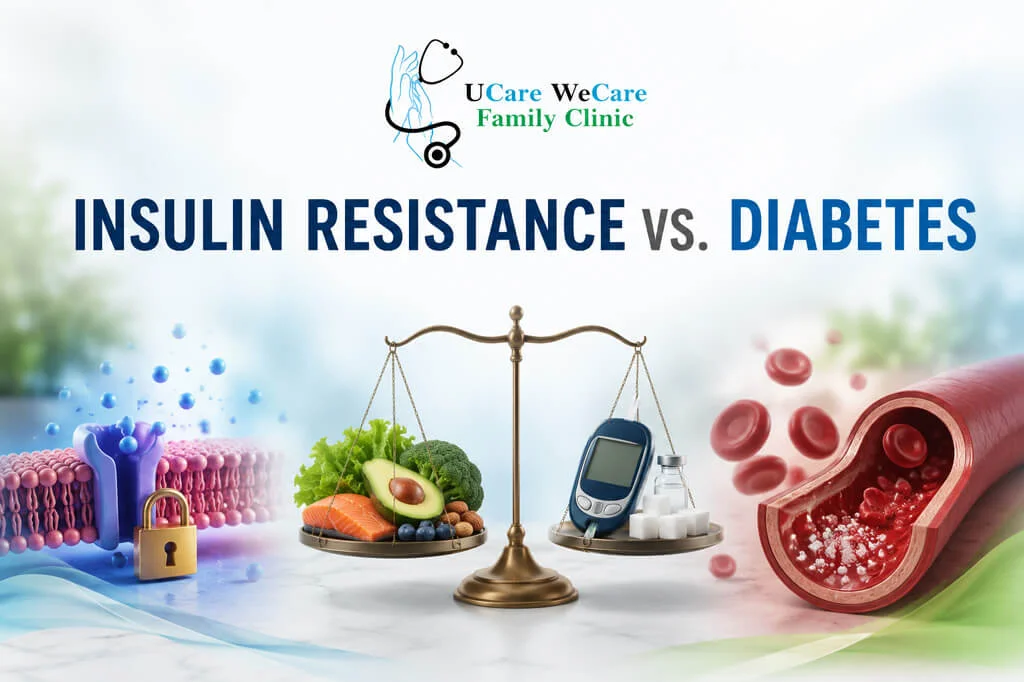
To understand insulin resistance, it helps to know how your metabolism works. Specifically, when you eat, your body breaks food down into glucose for energy. In response, your pancreas releases a hormone called insulin. You can think of insulin as a key that unlocks your muscle, fat, and liver cells.
Insulin resistance occurs when your cells begin to ignore that key. As a result, they do not respond well to insulin, leaving sugar stranded in your bloodstream. To compensate, your hardworking pancreas pumps out even more insulin. Over time, this struggle leads to chronically high insulin levels in your blood.
Insulin Resistance vs. Diabetes: The Similarities and Differences
While both conditions center around insulin, they have distinct medical profiles. Here is a clear breakdown of how they compare.
The Similarities
- Root Mechanics: Both conditions involve a clear breakdown in the body’s natural relationship with blood glucose regulation.
- Shared Risk Factors: You cannot diagnose either condition simply by looking at someone. Furthermore, they share common risk factors like a family history of metabolic issues, increasing age, and physical inactivity.
- Overlapping Treatments: Primary care providers frequently utilize similar medications, such as metformin, to manage both conditions. Therefore, early treatment can help manage early stage resistance and fully developed type 2 diabetes alike.
The Differences
- Reversibility: This is the most crucial difference between the two stages. For instance, insulin resistance is entirely reversible. Through targeted lifestyle changes and medically supervised weight management, you can train your cells to become sensitive again. Conversely, type 2 diabetes is a chronic, lifelong condition. While it can go into clinical remission, it is generally considered non reversible once established.
- Associated Health Risks: Insulin resistance does not just lead to diabetes. If left unmanaged, it is heavily linked to other serious conditions. These include Polycystic Ovary Syndrome (PCOS), metabolic syndrome, fatty liver disease, and heart disease.
What About Type 1 Diabetes?
It is important to note that insulin resistance does not cause type 1 diabetes. This is because type 1 diabetes is an autoimmune condition where the body attacks its own pancreas. However, an individual living with type 1 diabetes can still develop insulin resistance over time due to weight gain or lifestyle factors.
How to Tell If You Have Insulin ResistanceIn its early stages, insulin resistance is a silent condition. Most people experience no obvious symptoms for years. However, as the condition persists, certain physical warning signs may appear:
- Acanthosis Nigricans: Darkened, velvety patches of skin, typically appearing in the armpits or around the neck.
- Skin Tags: Small, harmless skin growths that often pop up in skin folds.
- Weight Gain: Especially unexpected weight accumulation around the midsection.
- Hormonal Disruptions: Irregular menstrual cycles, severe acne, or abnormal hair growth in females.
Because there is no single diagnostic test for this condition, a comprehensive medical evaluation is essential. At UCare WeCare Family Clinic, we look at the complete picture. Your provider may order specialized blood tests, such as fasting insulin levels or a comprehensive cholesterol panel, to accurately evaluate your metabolic health.
Understanding Prediabetes and the Transition to Diabetes
When insulin resistance goes unmanaged, the insulin-producing cells in your pancreas eventually wear out. When the pancreas can no longer keep up with the body’s high demand, blood sugar levels begin to steadily rise.
This middle ground is known as prediabetes. At this stage, your blood glucose is higher than normal, but not yet high enough to meet the threshold for type 2 diabetes.
Healthcare professionals diagnose prediabetes using standard diagnostic blood tests:
- Fasting Plasma Glucose (FPG): A reading between 100 to 125 mg/dL.
- A1C Test: An average of your blood sugars over the past two to three months, resulting in a score between 5.7% and 6.4%.
Clearly, this progression happens incredibly slowly, often taking several years. In fact, individuals with prediabetes have up to a 50% chance of developing full type 2 diabetes within a decade. Once blood sugar levels cross these thresholds (an A1C of 6.5% or higher), type 2 diabetes is officially diagnosed. This brings more pronounced symptoms like extreme fatigue, frequent urination, and slow-healing cuts.
Actionable Steps: Treating and Preventing Metabolic Decline
Whether you want to reverse insulin resistance or manage prediabetes, the strategy centers on building sustainable, healthy habits.
Medically Supervised Weight Loss
Carrying excess weight, particularly around the abdomen, significantly drives insulin resistance. Fortunately, dropping even a small percentage of your body weight can dramatically improve your insulin sensitivity. Because standard dieting can be incredibly challenging when your hormones are imbalanced, our clinic offers medically supervised weight loss programs to support your body safely.
Metabolic Nutrition Focus
There is no “perfect” universal diet, but healthy eating patterns like the Mediterranean or DASH diets yield excellent results.
- What to Eat: Focus on whole fruits, vegetables, lean proteins, whole grains, beans, nuts, and healthy fats.
- What to Limit: Heavily reduce your intake of refined carbohydrates and added sugars. Therefore, you should avoid sodas, pastries, and deep-fried fast foods which cause sharp blood sugar spikes.
Consistent Movement and Rest
Regular physical activity naturally coaxes your muscles to absorb glucose for fuel. Consequently, this reduces the need for heavy insulin production. Additionally, you should pair regular exercise with consistent, quality sleep. This is because sleep deprivation directly causes temporary insulin resistance the very next day.
Take Control of Your Health with UCare WeCare Family Clinic
Experts recommend that everyone get tested for prediabetes starting at age 45. However, if you have risk factors like high blood pressure or a family history of diabetes, you should be screened much earlier. After the initial test, you should be re evaluated at least every three years.
You do not have to wait for symptoms to appear to advocate for your health. Whether you need routine blood work, personalized glucose monitoring, chronic disease management, or a structured preventative care plan, our compassionate team is here to guide you.
Click here to schedule your comprehensive wellness checkup and lab work at UCare WeCare Family Clinic today!
Frequently Asked Questions
Q1: Can you reverse insulin resistance completely?
Yes, insulin resistance is entirely reversible. Specifically, you can reverse it by adopting a healthy lifestyle, losing weight, and following a preventative care plan with your medical provider.
Q2: How does a clinic test for insulin resistance?
Healthcare providers do not use a single test. Instead, they order routine blood work, such as fasting insulin tests, cholesterol panels, and an A1C test to evaluate your metabolic health.
Q3: What are the main symptoms of insulin resistance?
In many cases, it shows no symptoms. However, some people notice warning signs like sudden weight gain, extreme fatigue, skin tags, or darkened skin patches called Acanthosis Nigricans.
Q4: Does insulin resistance always turn into type 2 diabetes?
No, it does not always progress. Consequently, if you detect it early during the prediabetes stage, you can take action to stop it from becoming type 2 diabetes.
Q5: How does your clinic help with insulin resistance?
At UCare WeCare Family Clinic, we offer personalized glucose monitoring and medically supervised weight loss programs. Therefore, we help you manage chronic risks and safely protect your health.