
Disclaimer: The information provided in this article is for educational and informational purposes only and should not be considered medical advice, diagnosis, or treatment. Blood test results should always be interpreted by a qualified healthcare provider, as values may vary based on your age, medical history, medications, and overall health. If you have questions about your lab results or are experiencing symptoms, schedule an appointment with a licensed medical professional or visit UCare WeCare Family Clinic for personalized care.
Receiving a laboratory report can sometimes feel like trying to read a foreign language. You are handed a sheet filled with medical jargon, complex abbreviations, and random numbers. Consequently, many patients face unnecessary anxiety simply because they do not know how to interpret these findings.
At UCare WeCare Family Clinic in Newnan, Georgia, we believe that informed patients make the healthiest choices. Therefore, we have created this comprehensive guide to demystifying your lab paperwork. Whether you need general diagnostics, specific pre-procedure blood work, or specialized screenings like TB testing, understanding the basics will help you take charge of your health journey.
The Anatomy of a Laboratory Report
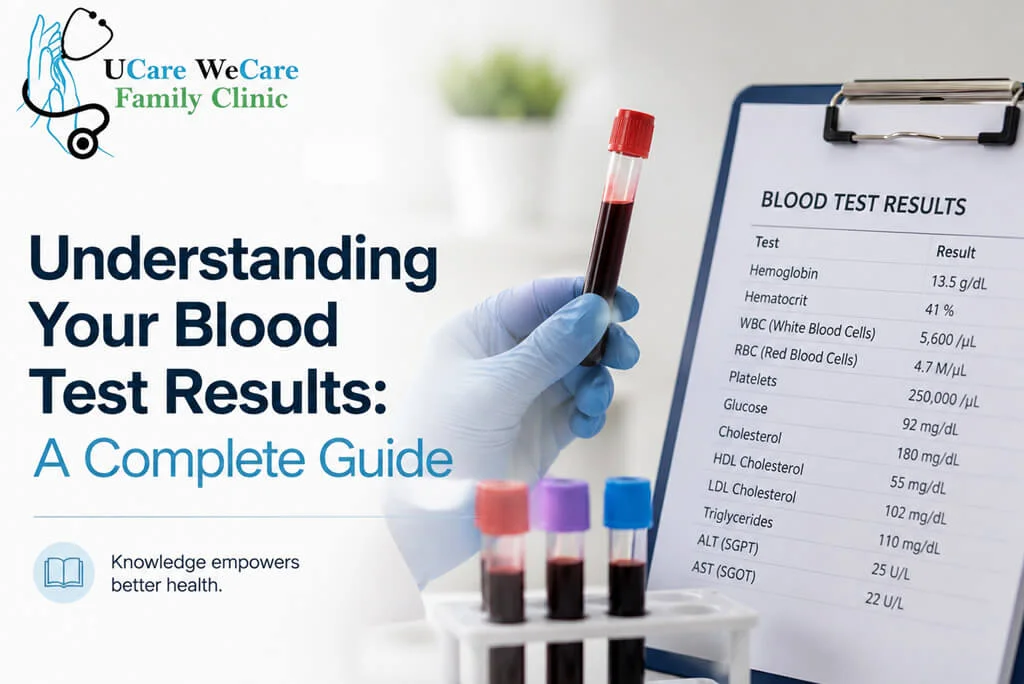
Before diving into specific medical panels, it is helpful to look at how a standard lab page is organized. Every document typically features three main components. First, you will see your personal data alongside the actual name of the test performed. Next to that name is your personal result value. Finally, the page will present a column known as the reference range.
Understanding the reference range is absolutely essential because it represents the baseline numbers found in healthy individuals. If your specific data falls outside this designated window, the system automatically marks it with a flag. Usually, this flag appears as an “H” for high or an “L” for low.
However, seeing a flag on your paperwork should not cause immediate panic. A slightly elevated number does not automatically mean you have a severe medical condition. Simple everyday variables like minor dehydration, stress, or what you ate the night before can cause temporary shifts. Your healthcare provider always evaluates these numbers as part of a larger, comprehensive clinical picture.
1. Complete Blood Count (CBC) Explained
The Complete Blood Count is one of the most common diagnostic panels ordered during routine physicals and preventative check-ups. Essentially, this evaluation tracks the overall cellular health of your blood tissue. It breaks down into three major cellular components that keep your body functional.
Red Blood Cells (RBCs)
These specialized cells transport fresh oxygen from your lungs to the rest of your organs. Within this section, you will notice markers like Hemoglobin (Hb) and Hematocrit (Hct). If these specific markers drop too low, it often points toward anemia, which explains chronic fatigue or unexplained weakness.
White Blood Cells (WBCs)
Your white blood cells serve as the primary defensive shield of your immune system. Whenever an outside virus or bacteria attacks, your body rapidly produces more white cells to fight back. Consequently, an elevated WBC count frequently signals that your body is actively combating an infection.
Platelets (PLT)
Platelets are tiny cell fragments designed to handle blood clotting. If you get a cut, these cells rush to the site to stop the bleeding safely. Therefore, low platelet counts might put you at risk for easy bruising, whereas high counts can cause clotting complications.
2. Comprehensive Metabolic Panel (CMP)
While the CBC looks at blood cells, the Comprehensive Metabolic Panel measures the chemical balance of your metabolism. This panel assesses 14 distinct substances found within the bloodstream. Consequently, it gives our medical team an excellent window into your organ health.
First, the CMP provides clear insights into kidney function by tracking Blood Urea Nitrogen (BUN) and Creatinine. High levels of these specific waste products suggest that your kidneys might be struggling to filter impurities efficiently.
Second, this screening evaluates liver health through crucial enzymes like ALT, AST, and Bilirubin. If your liver suffers inflammation or stress, these enzymes spill into the blood, triggering an elevated reading.
Lastly, the CMP monitors fluid balance and electrolyte levels, including sodium, potassium, and calcium. Furthermore, it measures your resting blood glucose levels. This particular number is fundamental for identifying pre-diabetes and managing long-term blood sugar levels.
3. Pre-Procedure Blood Work and Specialized Testing
Apart from routine wellness checks, targeted lab panels are mandatory prior to undergo surgeries or minor medical procedures. At UCare WeCare Family Clinic, we offer comprehensive pre procedure blood work and test packages tailored to ensure your safety.
Surgeons rely heavily on these pre procedure tests to confirm your body can handle anesthesia and heal effectively. For instance, we closely analyze your blood clotting speeds to prevent excessive bleeding during a procedure. Similarly, we verify kidney and liver health to ensure your system can process surgical medications smoothly.
Critical Safety Insight:
Failing to get your pre procedure lab work completed on time can delay your scheduled surgery. Always aim to get these diagnostics drawn at least one to two weeks before your procedure date.
In addition to surgical preparation, our clinic provides essential community health screenings like TB testing. Tuberculosis remains a serious bacterial infection that primarily targets lung tissue. Many local employers, schools, and healthcare facilities require official clearance before enrollment or hire. We offer both standard skin assessments and modern blood draws to give you fast, certified results.
Take Control of Your Health Journey Today
A stack of medical data can feel overwhelming, but you do not have to interpret it alone. Ultimately, blood work is simply a helpful map that shows us exactly how to optimize your daily vitality.
Whether you require urgent care diagnostics, routine preventive panels, official TB testing, or mandatory pre-procedure blood work, our boutique clinic is here to provide detail-oriented, compassionate support.
Don’t leave your health up to guesswork. Schedule an Appointment with UCare WeCare Family Clinic today, and let our dedicated team explain your numbers in a comfortable, welcoming environment.
Frequently Asked Questions About Lab Work
Do I really need to fast before my blood test?
Yes, certain assessments like fasting glucose or lipid panels demand an empty stomach. Eating food causes sudden spikes in sugar and fat particles within your bloodstream. As a result, having a snack before your draw could skew your data and generate inaccurate results.
How long does it take to get my results back?
Because UCare WeCare Family Clinic utilizes advanced, in-house laboratory services, many basic diagnostic readings are available very quickly. However, complex specialized screenings or specific pre-procedure panels might take a few business days to process completely.
Can I drink water while I am fasting for a test?
Absolutely. In fact, drinking plenty of plain water is highly encouraged before a blood draw. Staying well-hydrated plumps up your veins, making it significantly easier for our phlebotomist to locate a clean vein and finish the draw quickly.
What should I do if my lab results show an out of range flag?
The best course of action is to schedule a follow-up consultation with your care team. Please avoid searching for symptoms online, as generic internet searches often cause unneeded stress. Your nurse practitioner will explain exactly what that specific number means for your body.